
Is a VPN Really Necessary in 2026?
A honest breakdown of modern online privacy, security, and whether the cost is actually worth it.
NETWORKSECURITY
Posted by Tae K.
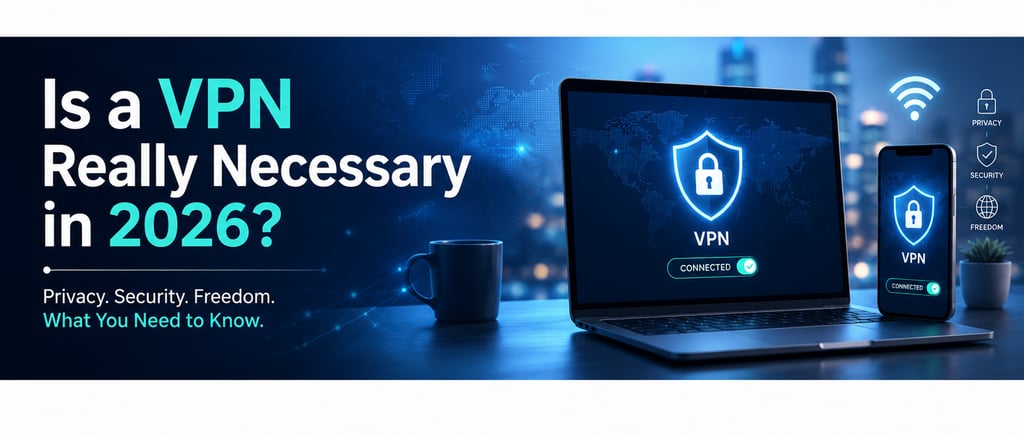
Is a VPN Really Necessary in 2026?
The Truth About Online Privacy, Security, and Freedom
Introduction
In today's digital world, almost everything we do happens online. We shop, bank, stream movies, work remotely, attend virtual meetings, and communicate through social media. As internet usage continues to grow, concerns about privacy, security, and data collection have become more important than ever.
One of the most commonly recommended tools for online protection is a Virtual Private Network (VPN). VPN providers often advertise complete privacy, anonymous browsing, and military-grade security. But is a VPN really necessary for the average internet user in 2026?
The answer is not as simple as "yes" or "no." A VPN can be incredibly useful in certain situations, while in others it may provide little practical benefit. Understanding how VPNs work, their advantages, limitations, and ideal use cases can help you decide whether investing in a VPN service is worth it.
What Is a VPN?
A VPN, or Virtual Private Network, creates an encrypted tunnel between your device and a remote server operated by the VPN provider.
Normally, when you visit a website:
Your device connects directly through your Internet Service Provider (ISP).
Your ISP can see which websites you visit.
Your IP address is visible to websites and online services.
When using a VPN:
Your internet traffic is encrypted.
The VPN server becomes the visible source of your connection.
Websites see the VPN server's IP address instead of your actual IP address.
Your ISP can see that you are connected to a VPN but cannot easily see the contents of your encrypted traffic.
In simple terms, a VPN acts as a secure intermediary between you and the internet.
The Main Benefits of Using a VPN
1. Enhanced Privacy
One of the biggest reasons people use VPNs is to improve online privacy.
Without a VPN, your ISP can potentially track browsing activity and collect usage data. While many websites already use HTTPS encryption, a VPN adds another layer of privacy by preventing local network operators from easily monitoring your online activities.
For privacy-conscious users, this additional protection can be valuable.
2. Protection on Public Wi-Fi
Public Wi-Fi networks are everywhere:
Airports
Hotels
Coffee shops
Restaurants
Shopping malls
These networks can sometimes be vulnerable to cyberattacks.
When connected to public Wi-Fi, a VPN encrypts your traffic, reducing the risk that attackers on the same network can intercept sensitive information.
For travelers and remote workers, this is one of the strongest reasons to use a VPN.
3. Improved Remote Work Security
Remote work has become standard for millions of employees worldwide.
Businesses frequently require VPN connections because they:
Protect company data
Secure employee access
Reduce unauthorized network access
Enable encrypted communication
Corporate VPNs remain an essential part of modern cybersecurity strategies.
4. Access While Traveling
Many travelers use VPNs when visiting foreign countries.
A VPN can sometimes help maintain access to familiar services while abroad and provide a secure connection when using unfamiliar networks.
However, users should always comply with local laws and the terms of service of any websites or streaming platforms they use.
5. Reduced Tracking
Advertising companies build profiles based on browsing habits, device information, and online behavior.
Although a VPN cannot completely stop tracking, it can make certain forms of location-based tracking more difficult by masking your IP address.
Common VPN Myths
Myth #1: VPNs Make You Completely Anonymous
This is one of the biggest misconceptions.
A VPN improves privacy but does not make you invisible online.
Websites can still identify you through:
Login accounts
Browser fingerprints
Cookies
Device information
If you sign into your social media account, the platform still knows who you are regardless of whether you're using a VPN.
Myth #2: VPNs Stop All Cyberattacks
A VPN is not antivirus software.
It cannot:
Remove malware
Prevent phishing emails
Stop ransomware
Protect weak passwords
Safe browsing habits remain essential.
Myth #3: Free VPNs Are Just as Good
Free VPN services often come with limitations:
Slower speeds
Fewer servers
Data limits
Advertising
Potential privacy concerns
In some cases, free VPN providers generate revenue by collecting user data, which defeats the purpose of using a VPN for privacy.
Potential Drawbacks of VPNs
Slower Internet Speeds
Because your traffic is encrypted and routed through another server, internet speeds can sometimes decrease.
Premium VPN services minimize this impact, but some slowdown is normal.
Additional Cost
Most reputable VPN providers charge monthly or yearly subscription fees.
Typical premium VPN plans range from:
$3–$15 per month
For users who rarely travel or use public Wi-Fi, this expense may not be justified.
Trust in the VPN Provider
Using a VPN means shifting trust from your ISP to the VPN company.
A poor provider could potentially log user activity or mishandle customer data.
Choosing a reputable provider with transparent privacy policies is extremely important.
Some Services Block VPNs
Certain websites and online services actively detect and restrict VPN traffic.
Users may occasionally encounter:
Captcha challenges
Login verification requests
Service restrictions
This can sometimes become inconvenient.
Who Actually Needs a VPN?
A VPN is particularly useful for:
Frequent Travelers
If you regularly connect to hotel, airport, or public Wi-Fi networks, a VPN provides valuable security.
Remote Workers
Anyone accessing company systems remotely should strongly consider using a VPN, especially if handling sensitive information.
Privacy-Conscious Users
People who prefer limiting ISP visibility and reducing online tracking may benefit significantly.
Digital Nomads
Individuals who work from multiple locations worldwide often use VPNs as part of their security toolkit.
Who May Not Need a VPN?
A VPN may be less essential if:
You only browse from your secure home network.
Most websites you use already employ HTTPS encryption.
You do not frequently travel.
Privacy concerns are not a major priority.
Modern browsers and encrypted websites already provide substantial protection for many everyday users.
Choosing a Good VPN
If you decide to use a VPN, look for:
Strong encryption standards
Independent security audits
No-logs policies
Fast server networks
Multi-device support
Kill switch protection
Transparent company ownership
Avoid selecting a VPN solely because it is the cheapest option.
Security and trustworthiness should be your primary considerations.
Final Verdict: Is a VPN Really Necessary?
For many internet users in 2026, a VPN is not strictly necessary, but it can be extremely useful.
If you frequently use public Wi-Fi, travel internationally, work remotely, or value online privacy, a VPN is a worthwhile investment. It adds an important layer of security and helps reduce unnecessary exposure of your online activities.
However, a VPN is not a magic solution. It does not provide complete anonymity, eliminate cyber threats, or replace good security practices. Strong passwords, multi-factor authentication, software updates, and safe browsing habits remain essential.
The smartest approach is to view a VPN as one component of a broader cybersecurity strategy rather than a complete privacy solution. For many users, it offers peace of mind and additional protection. For others, especially those who primarily use secure home networks, the benefits may be less significant.
Ultimately, whether you need a VPN depends on how you use the internet, how much privacy you want, and how much value you place on protecting your digital life. In an era where personal data has become one of the world's most valuable resources, many people find that extra layer of protection worth the cost.
Contact Us
Get in touch with us
Phone Number:
info@primetechcarelv.com
© 2025. All rights reserved.
Address:
Email: