
AI-powered phishing is changing the game.
Learn why AI attacks are more convincing than ever and get practical strategies to protect your personal data in 2026.
SECURITY
Posted by: Tae K
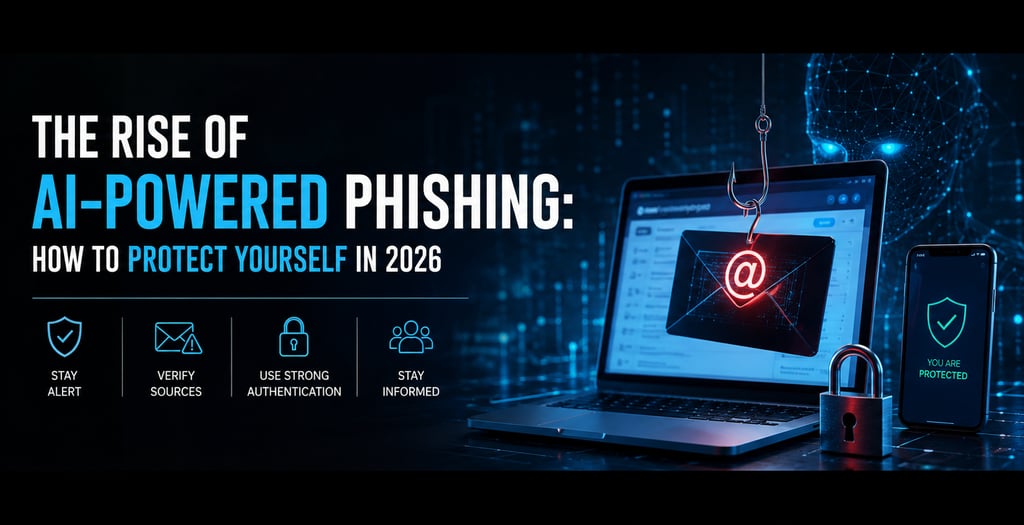
The Rise of AI-Powered Phishing:
How to Protect Yourself in 2026
The New Face of Cybercrime
Cybersecurity threats have evolved dramatically over the past few years, and one of the most alarming developments is the rise of AI-powered phishing attacks. Unlike traditional phishing scams that often contained poor grammar, suspicious links, and obvious red flags, modern phishing emails can be generated by advanced artificial intelligence tools that closely mimic human writing.
In 2026, cybercriminals are leveraging AI to create convincing emails, messages, and even voice recordings that appear to come from trusted sources. Whether it's your bank, your employer, or a popular online service, these attacks are becoming increasingly difficult to detect.
As AI technology becomes more accessible, understanding how these threats work is no longer optional—it is essential for anyone who uses the internet.
What Is AI-Powered Phishing?
Phishing is a cyberattack in which criminals attempt to trick users into revealing sensitive information such as passwords, credit card numbers, or personal data.
Traditional phishing emails were often easy to identify because they contained spelling mistakes, awkward language, or suspicious formatting. AI has changed the game.
Today, attackers can use AI tools to:
Generate highly professional emails in multiple languages
Mimic the writing style of real companies
Personalize messages using publicly available information
Create fake customer support conversations
Produce realistic voice clones for phone scams
As a result, victims are more likely to trust these communications and unknowingly provide confidential information.
Why AI Makes Phishing More Dangerous
The biggest advantage AI provides to cybercriminals is scalability.
Previously, creating a convincing phishing campaign required significant effort and language skills. Now, an attacker can generate thousands of personalized messages in minutes.
For example, imagine receiving an email that references your workplace, recent purchases, or social media activity. AI can gather and organize publicly available information to create messages that feel authentic and relevant.
Even more concerning is the emergence of AI voice cloning. Attackers can replicate someone's voice using only a short audio sample. A fake call that sounds like your manager, family member, or colleague could be enough to persuade someone to transfer money or disclose sensitive information.
Common Signs of an AI Phishing Attack
Although AI-generated scams are becoming more sophisticated, there are still warning signs to watch for:
1. Urgent Requests
Messages demanding immediate action should always raise suspicion.
Examples include:
"Your account will be suspended within 24 hours."
"Verify your payment information immediately."
"Transfer funds before the end of the day."
Attackers rely on panic and urgency to bypass rational thinking.
2. Unexpected Links or Attachments
Never click on links or download attachments from unknown or unexpected sources.
Even if the email appears legitimate, verify the sender before taking action.
3. Requests for Sensitive Information
Reputable organizations rarely ask for passwords, banking credentials, or security codes via email.
When in doubt, contact the organization directly through its official website.
4. Unusual Communication Patterns
If a colleague suddenly requests sensitive information or financial transfers through an unfamiliar channel, verify their identity through a separate communication method.
How to Protect Yourself
Fortunately, there are several practical steps you can take to reduce your risk.
Enable Multi-Factor Authentication (MFA)
Even if attackers obtain your password, MFA adds an extra layer of security.
Authentication apps are generally more secure than SMS verification codes.
Use a Password Manager
Strong, unique passwords for every account can significantly reduce the impact of a data breach.
Password managers make it easy to generate and store secure credentials.
Verify Before You Trust
If you receive a suspicious request, verify it through a trusted communication channel.
Call the person directly or visit the organization's official website instead of clicking links in emails.
Limit Public Information
The more personal information you share online, the easier it becomes for attackers to create convincing phishing attempts.
Review your privacy settings regularly and avoid oversharing sensitive details.
Stay Informed
Cybersecurity threats evolve constantly. Keeping up with the latest scams can help you recognize attacks before they succeed.
Looking Ahead
Artificial intelligence is transforming the digital world in remarkable ways, but it is also providing cybercriminals with powerful new tools. AI-powered phishing attacks are likely to become even more sophisticated in the coming years, making cybersecurity awareness a critical skill for everyone.
The good news is that technology alone does not determine the outcome. Human vigilance remains one of the strongest defenses against cybercrime. By recognizing common phishing tactics, verifying suspicious communications, and adopting basic security practices, individuals can significantly reduce their risk.
As we move further into the AI era, cybersecurity is no longer just an IT issue—it is a personal responsibility. Staying informed today may save you from becoming a victim tomorrow.
Contact Us
Get in touch with us
Phone Number:
info@primetechcarelv.com
© 2025. All rights reserved.
Address:
Email: